

Review: “Chesapeake”

"Chesapeake" at the Henegar Center for the Arts

“Chesapeake” at the Henegar Center for the Arts

By PAM HARBAUGH

Like the estuary after which it is named, the one-man play “Chesapeake” brings together opposing forces to create something new and wonderful. Here, those opposites are art and politics and what they create when mixed is potent.

Stirring these brackish waters is prolific playwright Lee Blessing. As he has done in other plays, most memorably in his 1985 “Eleemonsynary,” Mr. Blessing uses exquisite prose laced liberally with intellectual diction. In his 1999 “Chesapeake,” he uses language to weave a mesmerizing tale of magic, mystery and love while he winningly asserts the importance of artists to take us to places we never dreamed existed.

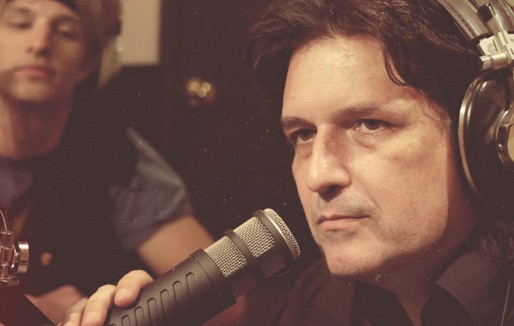
And what an imaginative story this one-man play tells. Surprises, delight and soul lifting language draw you into it so deeply it brings tears. And in the Henegar’s intimate black box theater, it is directed so well by Hank Rion and performed so tenderly by an outstanding Terrence Girard, it will make you melt for its sheer artistry.

In “Chesapeake,” a performance artist named “Kerr” walks onto a stage with only a chair and a stool on which resides one glass of water. Kerr recounts the time when Marinetti’s manifesto on futurism, which purports the savage function of art, inspired a brilliant concept — read the “Song of Solomon” while audience members walk to the stage to remove one piece of Kerr’s clothing. The end result was Kerr’s nudity and the audience’s visceral reaction.

Enter Sen. Therm Pooley, a conservative Southern politician hell bent on denying Kerr’s grant from National Endowment for the Arts. In fact, Pooley wants to do away with the NEA completely.

Add to the mix the senator’s favorite companion, a Chesapeake Bay Retriever; and the senator’s sexy assistant, Stacie.

And that is where the plot of this fabulous fable will no longer be revealed here. It is simply too rich and too full of emotion and enchantment to spoil it for you. However, once it’s over, you will notice a number of first act clues that the playwright tosses for you to sniff out.

But do let it be said that Mr. Girard is at his most compelling in the role of Kerr. In telling the story, he revels in nuance as he switches from one persona to the next, arriving ultimately at the heart of each character. He handles Mr. Blessing’s poetic speeches with delicacy and understanding, wringing out the richness of each line. But it is in the second act where Mr. Girard electrifies the stage, causing the audience to hang onto every word.

Mr. Rion smartly keeps the staging simple. In the second act, a bold choice rather amplifies the recurring theme of Marinetti’s notion that art needs to startle. But oh, my, something must be done about that lighting. Not enough instruments and what felt like a finicky lighting board caused too many missed cues and dark spots on opening night.

Early in the play, Kerr talks about a performance artist who simply banged on a pan 1,000 times with a wooden spoon. He calls it a “bubble of aesthetic sadism” but that, ultimately, “failed art is better than no art at all.”

That may be true, but with the Henegar’s production of “Chesapeake,” we get a chance to see successful art. In fact, with this artful production, the Henegar Center for the Arts reveals its quickening potential as a powerhouse cultural institution.

This is theater at its most pure, harkening to its origins. A simple set. A wickedly engaging story wonderfully told. Not to be missed.

SIDE O’ GRITS: “Chesapeake” performs 8 p.m. Fridays and Saturdays and 2 p.m. Sundays through May 12 at the Henegar Center for the Arts, 625 E. New Haven Ave., Melbourne. $15. Call 321-723-8698 or visit www.henegar.org.

Review: “All Shook Up”

Henegar Center "All Shook Up"

Henegar Center “All Shook Up”

By Pam Harbaugh

The Henegar Center has a hunk-a burnin’ love on its stage right now — its fun and endearing production of “All Shook Up.”

The musical was written by Joe DiPietro, the same man who wrote two very popular shows produced at the old Phoenix Theatre and at Melbourne Civic Theatre — “I Love You, You’re Perfect, Now Change” and “Over the River and Through the Woods.” Just like DiPietro does in those two, he brings wit and contemporary sensibilities into a neat little package of fun.

Here, it’s all about a dull mid-west town in the mid-50s. On an average ho-hum day, a stranger named Chad (Anthony Detrano) comes to town on a motorcycle, bringing with him rock n’ roll and a gyrating pelvis.

Of course, this is intended to be evocative of Elvis Presley, especially since much of the music in the show comes from the King of Rock ‘n Roll’s songbook. There’s “Jailhouse Rock,” “Love Me Tender,” “Can’t Help Falling in Love” and many more.

This is classified as a “jukebox musical.” To that end, the clever and effective scenic design suggests a jukebox, complete with brightly lighted arc running the entire length of the proscenium. Back onto the stage, a platform is made to look like a stack of records, with one being plucked for play.

Although on opening night, the show began with wobbly legs, it soon found its footing and delivered all the fun the enthusiastic audience expected.

Especially entertaining are Menasha Duchemin and Jarrett Poore who really summon the spirit of the music.

Ms. Duchemin is a singing delight as Lorraine. She’s got a powerful voice and her “It’s Now or Never” duet with Dean (Austin Nolder) is spot on.

And how much do we love Mr. Poore in the role of nerdy Dennis. This guy could make a show-biz living doing that stock character. He’s also got the goods when it comes to dancing and singing. We’re looking forward to seeing a lot more from him.

Debra Hart is a dancing and singing hoot as Miss Sandra, the lady who runs the museum and pines for a man with a cultured heart.

Which brings us to Natalie, played by Merissa Laite, she of beautiful soprano voice. Channeling the spirit of Shakespeare, Mr. DiPietro has written a sub plot reminiscent of “Twelfth Night,” in which a love triangle involves a man, a woman, and a woman disguised as a man. This is a delightful little piece of theatrical fluff and Ms. Laite, Ms. Hart and Mr. Detrano handle it with charm.

Director Steven J. Heron infuses plenty of opportunity for laughs. He gives lots of space to the funny lines (everything but a rim shot), so you can’t miss them. And there’s plenty of physical schtick as well, something for which Mr. Heron has a deserved reputation.

Deborah Rappa Crisafulli’s choreography pumps up the energy and sets the entire cast into entertaining, big dance numbers. Led by Susan M. Diebel, the 12-piece pit orchestra serves up some terrific music. Especially nice are the horns in “It’s Now or Never.”

The only nagging element is the lighting. The stage is just too dark. Having the object of secondary focus in the dark (Miss Sandra as she is being sung to or a character who runs on to deliver a message) is a no-no. Certainly, that may be the fault of there not being enough lighting instruments. If that is, indeed, the case, then one can only hope that those 50/50 drawings increase in popularity.

This show has a wide appeal. There were teenagers, parents, middle-agers and grand parents in the audience on opening night and, during curtain call, they all got to their feet to dance to the beat. It’s a fun, engaging way to bring the curtain down on the Henegar’s 2012/2013 mainstage season.

SIDE O’ GRITS: “All Shook Up” runs through May 12 at the Henegar Center for the Arts, 625 E. New Haven Ave. Melbourne. Curtain is 8 p.m. Fridays and Saturdays and 2 p.m. Sundays. $16 to $23, handling fees may apply. Call 321-723-8698 or visit www.henegar.org.

Review: ” ‘night, Mother”

" 'night, Mother" at Surfside Playhouse

” ‘night, Mother” at Surfside Playhouse

By PAM HARBAUGH

Yes, it’s called show business, but sometimes we just gotta have the art. That’s what’s happening now at Surfside Playhouse where Marsha Norman’s devastating ” ‘night, Mother” is leaving audiences limp with emotion.

This 1983 Pulitzer Prize winning drama is played in real time and concerns Mama and her grown daughter, Jessie. Set in the kitchen and living room of Mama’s home, ” ‘night, Mother” begins with Jessie making sure an array of clocks are all on time. She takes out a pad of paper and looks at what appears to be a list. We immediately get a sense of something big about to happen.

Indeed. Jessie plans to take her own life this night. First, though, she wants everything in order — belongings handed away, candy bowls filled, even the suicide scene kept clean as possible. And, she wants to spend the last night with Mama to convince her that her decision is the only way for her.

After all, says Jessie, who is depressed by her own failed life and filled with hopelessness, whether she gets off the bus now or in 50 years makes no difference. She’ll still get to the same destination.

Mama, who has always turned a blind eye to problems in her own life and Jessie’s, at first doesn’t buy it. But as the evening’s encounter evolves, her despair grows. It is Mama’s agony that holds the audience in its grip.

The play’s naturalism style — real time, real place — seeks to heighten intimacy with the story and believability in its characters and plot. A proscenium stage like that at Surfside’s presents challenge to this style of theater. The aesthetic distance prevents us from achieving that deep intimacy and hence a deeper response.

Nevertheless, this is a powerful and moving production thanks to: a beautifully crafted realistic set (master carpenter David Young); Joan Dunn’s strong direction; Matt Davis thoughtful, artistic lighting design; Mike Mellen’s sensitive sound design; and, of course, stunning portrayals by Nadine Antaillia and Victoria Lee (Tori) Smith.

Ms. Antaillia shows us once again powerhouse acting talent. She brings a wide range of emotion to Mama and, as expected, really digs into the meat of the story. Enjoying the emotional feast as well is Ms. Smith who has her strongest moments in her character’s fierce confrontations with Mama.

Alas. The evening I went, there were only 11 cars in the parking lot. There was plenty of room to stretch out in the theater. An abundance of volunteers greeted the few patrons cheerily. This is not the way it should be. This theater should be packed.

This is an opportunity to see a Pulitzer Prize winning drama performed by two of the area’s best actresses. So…go! Don’t be afraid of the emotion or the power of this drama. It doesn’t happen that much here. You can take it.

SIDE O’ GRITS: ” ‘night, Mother” performs 8 p.m. Fridays and Saturdays and 2 p.m. Sundays through April 28 at Surfside Playhouse, 301 Ramp Road, Cocoa Beach. $10. Call 321-783-3127 or visit www.surfsideplayers.com.

Review: “Grease” at Riverside Theatre

"Grease" at Riverside Theatre

“Grease” at Riverside Theatre

By PAM HARBAUGH

Sometimes it takes a solid production to realize just how lacking a show is. That’s the case with “Grease,” on stage now at Riverside Theatre in Vero Beach.

Make no mistake: Riverside’s production is slick. It’s filled with sensational choreography, bright costumes and fun performances. As you do the stroll down memory lane, you’ll tap toes to musical numbers like “Summer Nights,” “Greased Lightning,” “We Go Together” and “Born to Hand Jive.” If only there was an opportunity for more.

But, ironically, this good production reveals the meager libretto written by Jim Jacobs and Warren Casey. “Grease” had its world premiere in 1971 in Chicago, and then had its “Broadway” debut a year later. I put that in quotes because that “Broadway” theater was the Eden Theatre on the Lower East Side’s Second Avenue. (It was the same off-Broadway theater where “Oh! Calcutta!” debuted in 1969.)

At the time, “Grease” was fresh and fun. I can say that because I actually saw it and was surprised to see that it starred one Barry Bostwick in the role of Danny Zuko. Surprised because, in the late ‘60s, yours truly once made a costume for Mr. Bostwick when we were students in the same theater department at a small San Diego college; and, like all the girls there I had a huge crush on the talented performer.

Then, the “Grease” nostalgic trip into 1950s teenage love was massive and sexy and daring. There was talk of “virgin pins” (still in the show, for a definition, ask your grandmom) and then, Saran Wrap was used as a prop to suggest contraception. In the early ‘70s, with all those hippies and free love, “Grease” exuded sexy innocence. We were happy to wait through those long pieces of dialogue, the gawky teens, dorky teachers, guys with D.A. haircuts and girls with super tight skirts.

For sure, the Riverside production, directed by Bruce Lumpkin, does serve up fun. Matthew Ragas exudes stage charisma as Danny Zuko, the bad guy “J.D.” Rydell High student who falls for girl-next-door Sandy, sung sweetly by petite Laura Giknis.

But Michelle Gaudette’s choreography is the star of this show. Ms. Gaudette covers the stage with big, bold movement and the most intricate, engaging and entertaining “Hand Jive” number this reviewer has ever seen.

Ken Clifton’s music direction and Lisa Zinni’s costume design are bright and fun.

Cliff Simon sets the stage with a couple of towering images of a young Elizabeth Taylor and James Dean. On opening night, the second act opened with a couple of bizarre, pointy hanging scenic units obscuring top of the “backdrops.” They seemed to suggest old Cadillac fins or ICBMs, which were, after all, part of the 1950s Cold War culture. But instead of watching the show, you keep staring at them trying to discern if their intent is passive or evil .

Through the 42 years since its world premiere, “Grease” has become mostly the stuff of high school and community theaters, where one always murmurs a well-done or applauds wildly in gratitude of the lively musical numbers. But on a professional stage like Riverside, which has a well-deserved solid reputation for excellence, the ravages of time shows.

SIDE O’ GRITS: “Grease” runs through May 4 at Riverside Theatre, 3250 Riverside Drive, Vero Beach. Tickets are $36 to $70. Call 772-231-6990 or visit www.riversidetheatre.com.

Review: “Faith Healer” at Riverside Theatre

Colin Lane as Frank Hardy in "Faith Healer" at Riverside Theatre, Vero Beach, FL.

Colin Lane as Frank Hardy in “Faith Healer” at Riverside Theatre, Vero Beach, FL.

BY CATHY MATHIAS

Riverside Theatre’s intense production of “Faith Healer” puzzles, mystifies and intrigues.

“Faith Healer” was written in 1979 by Ireland’s foremost playwrights, Brian Friel, who has been hailed as the greatest living dramatist in the English language. The play is presented via three actors’ monologues. It centers on charismatic Irish faith healer Frank Hardy, who travels beleaguered towns in the British Isles claiming the power to heal. With him are Grace Hardy and his thread-bare manager, Teddy.

As they tell about their lives, we “see” Grace’s angry father, Frank’s dead mother, the groups of invalids, the healings, the old van, the grassy field, and the pub. With our imaginations in overdrive, we try to piece together the truth behind Frank’s faith healing tour so many years ago.

Frank Hardy, beautifully portrayed by Colin Lane, jokingly says his message could be more easily received by those in the Celtic countries. He sounds as if he’s speaking in tongues when he rattles off the names of those Celtic towns. He’s in turn joyous, triumphant, and riddled by doubt and fear as he delivers the first then the final monologue. Lane has performed in major regional theatres including American Repertory Theatre, the Guthrie, Mark Taper Forum and in many films.

Laurie Dawn plays Grace Hardy in a performance that ratchets up the intensity. She is heartbreakingly accurate as an Irish woman trying to get on with her life but forever tortured by her love for a man who could look right past her. She says she was his wife but accepted it when he told the crowds she was his “mistress” for the titillating effect. Her devotion to him was complete; she was nothing without him. Laurie Dawn is from New York City and you may have seen her work in Off-Broadway plays, the HBO series “Boardwalk Empire” and the film “Revolutionary Road.”

Lucius Houghton portrays the Cockney manager, Teddy, and when he comes on stage after the intermission, he is a welcome bit of comic relief in his old satin smoking jacket. He’s energetic, passionate, amiable and seemingly the most trustworthy. Houghton gets plenty of laughs for his story about his bagpipe-playing whippet dog. Houghton is a founding member and actor with North Carolina Shakespeare Festival.

Director Allen D. Cornell has designed a simple wooden platform intertwined with twigs and branches evocative of the rural settings in which the trio traveled. A criss-cross of wooden beams mimics the rafters of a church building and the cross of crucifixion.

This is a dark, brooding and slightly funny Irish play that doesn’t prepare any of us for the shock at the end.

SIDE O’ GRITS:
“Faith Healer” runs through April 14 at Riverside Theatre, 3250 Riverside Park Drive, Vero Beach. Tickets are $43 general and $23 for students under 17 years. Call 772-231-5860 or visit www.riversidetheatre.com.

Review: “Steel Magnolias” at Titusville Playhouse’s Emma’s Attic

Titusville Playhouse's "Steel Magnolias"

Titusville Playhouse’s “Steel Magnolias”

.
By CATHY MATHIAS

There are only two more weekends to catch “Steel Magnolias” playing at Emma’s Attic, the upstairs black box theater at Titusville Playhouse in downtown Titusville. But, hurry because the shows are selling out fast!

Prepare yourself for lots of laughter and a few tears at the Titusville production. This is a laugh-out-loud play about friendship, competition and the wisdom of lightening up a little to get through the hard times. It’s obvious these six women on stage have fun portraying Southern belles from Natchitoches, Louisiana. They’re tough as steel or sweet as magnolias – whatever the occasion calls for.

Robert Harling, who grew up in Natchitoches, LA, wrote this script from his heart in 1987 while struggling in New York City as an actor and it became an immediate success. It ran Off-Broadway in 1987, then on Broadway in 2005. Most people are familiar with the 1989 film starring Dolly Parton, Julia Roberts, Sally Field, Olympia Dukakis and Shirley MacLaine.

The story opens in a beauty parlor where women prepare for Shelby’s wedding day. The play hinges on the choices made by Shelby, who is confident that marriage to her beau, Jackson, will start a wonderful future together.

This is an enjoyable little show. Immensely watchable is newcomer Brittany Grant (a former California actress) who brings the main role of Shelby Eatenton-Latcherie to life with her sweet-as-molasses accent, preening ways and aching vulnerability.

Her mother, M’Lynn Eatenton — portrayed by Amy Gadapee — projects the reserved, hesitant, guarded attitude. Knowing her daughter must control her diabetes, M’Lynn needs to keep Shelby in check. Gadapee’s portrayal of a woman wound tight presents an excellent foil against the extravagance of the other women in the play.

Debbie Parrish plays a lovable Truvy Jones, who operates a beauty salon in her house. She brings warmth and kindness to her role. Mary Anne Bennett shows great sense of physical comedy in her role as the beauty school graduate, Annelle Dupuy, and gets lots of laughs.

Janice Pound portrays the mayor’s widow, Clairee Belcher, who quietly tries to get the others to raise the bar in their social life, even suggesting a trip to enjoy New York theater. This actress should raise her volume so her voice will carry to the back of the house. Clairee loves to irritate the wonderfully grouchy Ouiser Boudreaux (pronounced “Weeza Boodro”). Ouiser is played by Norma McGrath who just moved to Brevard from Boston and we’re glad she did! Her rough, gravelly voice is perfectly pitched against Clairee’s sing-song flightiness.

The set design goes for realism with sinks, hair dryers and old beauty parlor chairs from the 1980s, but the fake mirrors don’t make it, and the dull-gray backdrop curtain lends a dour note, making me wish for more wisps of color here and there. The costumes are authentic to the time and place, but Shelby deserves a better wig. The lighting for this show is unremarkable except for one scene.

The actresses in this Titusville production seem more down-to-earth, not as hyper and artificial as in the film version. The performances of Brittany Grant, Mary Anne Bennett and Norma McGrath are real stand-outs. And as Clairee would say, why not “expose yourself to a little more culture” and support the arts.

Side o’ Grits:

“Steel Magnolias” runs through April 14 at Emma’s Attic in Titusville Playhouse, 301 Julia St., Titusville. Curtain is 8 p.m. Fridays and Saturdays and 2 p.m. Sundays. $10. Call 321-268-1125 or visit www.titusvilleplayhouse.com

Review: “Jesus Christ Superstar” at Cocoa Village Playhouse

"Jesus Christ Superstar" at Cocoa Village Playhouse

“Jesus Christ Superstar” at Cocoa Village Playhouse

Review by CATHY MATHIAS.

Perfectly timed with the Easter season, Cocoa Village Playhouse is now presenting “Jesus Christ Superstar.” It’s also timely because the theater world is celebrating 40 years of the music of Andrew Lloyd Webber with a new international arena tour, a UK television special and a Blu-Ray DVD release.

Since 1971, this rock opera, born during the hippie counter-culture revolution, has been presented in modern dress. This local production turns the tradition of this musical upside down, presenting a show which looks like something taken from the pages of a Sunday School pamphlet. The only modern touches here are Herod’s sparkly dancers and the scene of Judas in the after-life.

In slow moving, gentle fashion, Benjamin Cox personifies that blue-eyed Jesus in the white flowing robes we know so well. It’s uncanny how much he looks like the traditional image of Jesus presented in Western culture. If you’ve seen any Biblical film, you’re familiar with this depiction but brace yourself for his singing — remember this is rock, not all sweetness and light.

Natalie McKnight astonishes in her portrayal of Mary Magdalene. Her brilliantly clear voice is effortlessly ascendant in the famous “I Don’t Know How to Love Him” which became such a popular hit in the 1970s. A former resident of New York City, McKnight toured with this musical for ten years so she knows it well.

James Spiva does a fine job revealing his confusion and guilty conscience as a curly-haired Judas Iscariot, the apostle who betrays Jesus. While he could perform less angrily at the beginning to give himself somewhere to go later in the show, Spiva’s voice is strong. The audience wanted to hear his voice emanating from those feverish lips more clearly.

In fact, we couldn’t hear many of the voices because the music from the absolutely top drawer orchestra (kudos to the musicans) was so loud. Yes, this show is supposed to be ear-splitting because it was inspired by heavy metal rock, and yes, it’s devilishly difficult to sing opera, but the vocalists were nearly indecipherable. Some in the audience asked seatmates what was going on, some cupped their ears or fiddled with their hearing aids.

Other familiar songs include “What’s the Buzz”, “Hosanna,” “Everything’s Alright” and of course the triumphant theme song “Jesus Christ Superstar.”

The traditional Last Supper tableau begins act two mimicked the painting by Leonardo da Vinci so well, it got a round of applause. The Garden of Gethsemane scene is another well-planned tableau with the sleeping apostles set against the image of Jesus in prayer. Created by scenic/lighting designer Ian Cook, the visuals evoked Renaissance painting complete with puffy clouds, evocative starry nights and hopeful blue skies. Two sets of stairs and a platform serve, in turn, the setting for the Palatine HIlls, the Temple, PIlate’s Palace and the soldiers’ torture area.

But while the tableaux were strong, the show feels a little visually static, especially in the scene when Judas paces around the Pharisees before accepting the bag of silver. The scene in which Jesus is lashed by centurions and raised on the cross is spell-binding, despite seeing the wires lifting him into heaven.

In her curtain speech, director Anastacia Hawkins-Smith said she had tried for many years to get the rights to perform this musical and finally it happened this year. Hallelujah!

The show runs through March 31 at Cocoa Village Playhouse, 300 Brevard Avenue, Cocoa. Tickets are $18 to $31. Call 321-636-5050 or visit www.cocoavillageplayhouse.com.

Review: “Into the Woods” at MCT

"Into the Woods" at Melbourne Civic Theatre

“Into the Woods” at Melbourne Civic Theatre

By Pam Harbaugh

There’s something scary out there. And your children won’t listen. And your lovers leave you when you’re only halfway through. But despite the fear, the reality and the promise of death, you can’t avoid going into the woods. After all, it’s life.

Those are only some of the motifs in Stephen Sondheim’s brilliant musical, “Into the Woods.” While it’s been on Broadway, seen productions in large regional theaters and mid-sized community theaters, here it comes to life in the small 93-seat Melbourne Civic Theatre.

Proving again that size does not matter, this theater company, led by Peg Girard and her wealth of talented designers and actors, tell this story rapturously. Glorious voices squeeze every ounce of wit, irony and pathos from Mr. Sondheim’s lyrics and music and from James Lapine’s libretto. Designers set the stage cleverly, prodding the audience’s imagination to fill in the blanks. And it all undulates theatrically with delicate, grand pace swelling into emotion.

The storyline cleverly weaves storybook characters in and out of the woods. In it, the Baker and his Wife yearn to have a baby. They go to the Witch who gives them a task involving Jack of the Beanstalk fame, Little Red Riding Hood, Cinderella and Rapunzel. All of them learn quickly that you have to be careful for what you wish. The fairy tales blend into the human reality that is not at all “happily ever after.”

Vanessa Quigley finds a deep heart in her fearless portrayal of the Baker’s Wife. Ms. Quigley has an exquisite voice and has performed professionally. You can’t stop your own tears while she sings in her final number: “Sometimes people leave you/halfway through the wood/Do not let it grieve you/No one leaves for good./You are not alone/No one is alone.”

Opposite Ms. Quigley is Dana Blanchard, who brings deep emotion and tenderness as the Baker.

Brenda Sheets goes for it all as the Witch. She brings plenty of laughs as she stirs up the action. And, she easily handles the wickedly intricate “Witch’s Rap” which has lines such as: “I caught him in the autumn/In my garden one night!/He was robbing me, Raping me/Rooting through my rutabaga/Raiding my arugula and Ripping up my rampion/My champion! My favorite!”

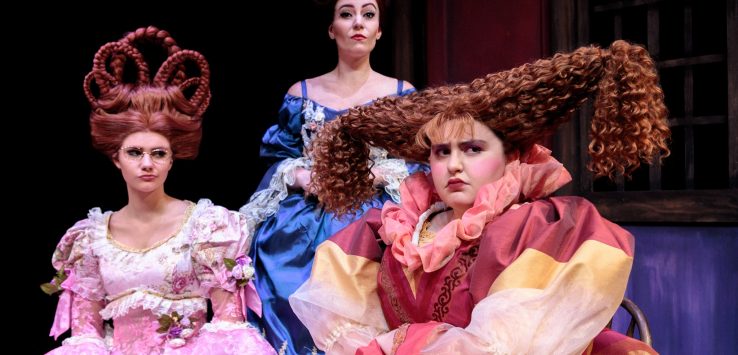
Angelic-voiced Leslie Hayford is Cinderella, who, after finding her Prince Charming, discovers he’s not that charming after all. Ms. Hayford also needs congratulations for keeping a straight face while all around her are the most delightfully silly people: Pam Quenzler maintains a sour pucker throughout as the Stepmother; Stepsisters Becky Behl Hill and Emily Pickens are comically broad; and although he hasn’t much to say, Bob Gray’s goofy looks tell it all as Cinderella’s father.

The Princes Charming – there are two, one for Cinderella and one for Rapunzel – are also comically broad. Chris Rye has down pat that funny William Shatner smarmy school of acting. As Cinderella’s Prince and the Wolf, Bryce Niehaus shows off a divine voice. And, as the Wolf, he also lets his freak flag fly while seductively singing “There’s no possible way/To describe what you feel/When you’re talking to your meal.”

Jack is Daniel Grest, who sang in numerous professional settings last year touring with The American Boychoir. Donna Furfaro is Jack’s mother. Frustrated at her son’s affection for a cow, she sings “We’ve no time to sit and dither/While her withers wither with her/And no one keeps a cow for a friend.”

Tori Terhune is a bundle of joy as Little Red Riding Hood; and Evita Clowney brings yet another gorgeous voice to the stage as Rapunzel. Randy Caldwell, as both the Narrator and mysterious man, sews the action together and interacts warmly with the audience.

The action is set on designer Gary Postlethwait’s concept of fairy tale books. Rather than crowd the small stage with huge scenic units traditionally used in the show, he wisely relies on the actor’s ability to engage the audience’s imagination.

Big kudos to music director John Kurowski and choreographer Holly McFarland who keep this production moving tightly. Lighting designer Scott Sutherland brings an appropriately dark mood to the stage. Wendy Reader helps add offstage action with her sound design; and Alice Henning, head of wardrobe completes the picture.

This is a big show which absorbs you completely. It soars with big messages and unforgettable music. Going “Into the Woods” might be scary, but if you avoid it, you haven’t lived. You’ve kept your reality within the confines of a fairy tale world. Its final message, as sung by the Baker’s Wife, reminds you that people may leave you, but you’re never alone. And that’s the best kind of Happily Ever After anyone can wish for.

Interesting facts: It was an amazing 26 years ago when this musical opened on Broadway. It opened on Nov. 5, 1987 after 43 previews which had commenced Sept. 29, 1987. It won the 1988 Tony Award for best book of a musical and best original score. It also won the Drama Desk Award for outstanding musical. (Source, www.ibdb.com, Internet Broadway Database)

SIDE O’ GRITS: “Into the Woods” runs through April 28 at Melbourne Civic Theatre, 817 E. Strawbridge Ave., Melbourne. $25 general, $23 seniors, military and students. Call 321-723-6935 or visit www.mymct.org.

U.S. THEATER CRITICS NAME SIX FINALISTS FOR NATION’S LARGEST NEW PLAY AWARD

Quincy Tyler Bernstine as Nurse Tina and Danielle Skraastad as Maxine in Lucas Hnath's "Death Tax" at 2012 Humana Festival of New American Plays

Quincy Tyler Bernstine as Nurse Tina and Danielle Skraastad as Maxine in Lucas Hnath’s “Death Tax” at 2012 Humana Festival of New American Plays


Here is a press release announcing six new plays selected as finalists in this year’s Harold and Mimi Steinberg/American Theatre Critics Association New Play Award:

The American Theatre Critics Association (ATCA) has selected six finalists for the Harold and Mimi Steinberg/American Theatre Critics Association New Play Award, recognizing playwrights for the best scripts that premiered professionally outside New York City during 2012.

The top award of $25,000 and two citations of $7,500 each, plus commemorative plaques, will be presented April 6 at Actors Theatre of Louisville during the Humana Festival of New American Plays. At $40,000, Steinberg/ATCA is the largest national new play award of its kind.

In 1977, ATCA began to honor new plays produced at regional theaters outside New York City, where there are many awards. No play is eligible if it has gone on to a New York production within the award year. Since 2000, the award has been generously funded by the Harold and Mimi Steinberg Charitable Trust.

The finalists, alphabetically by playwright:

“Gidion’s Knot,” by Johnna Adams, is a complex, powerful and gripping drama in which the mother of a dead student visits his teacher seeking the backstory behind his death – with each woman discovering profound secrets as layers of truth are exposed. Described by judges as “a perfect piece of theater” that is both exhilarating and devastating, the play puts in direct conflict two cherished values — freedom of expression and the safety of our children. Adams’ script includes numerous Pinteresque pauses that eloquently stand-in for very specific but unspoken thoughts as two human beings realize that words are an insufficient venue of communication. The play received its world premiere in July at the Contemporary American Theater Festival in Shepherdstown, West Virginia.

“The Invisible Hand,” by Ayad Akhtar, is a taut and unsentimental political thriller with economic overtones that is rooted in the real and artificial barriers to human connections. It posits an international banker kidnapped by terrorists in Pakistan and forced to earn his own ransom by helping his captors manipulate and master the world commodities and currency markets. The evolving, almost intimate relationship between the banker and his chief interrogator raises what one judge called “morally queasy” questions about how all societies are forever imprisoned in the system of global economics in which financial measures are ultimately meaningless. The work bowed last March at the Repertory Theatre of St. Louis.

“Death Tax,” by Lucas Hnath, is a tough-minded drama about dying in America in the 21st Century. Set in a nursing home, an elderly woman is convinced that her daughter wants her to die quickly enough to take advantage of an inheritance tax loophole and tries to bribe a nurse to prevent her murder. Without positing easy answers, the play dissects greed, dysfunctional human relationships and the potential implications of a medical paradigm that can keep people alive indefinitely. Hnath’s heightened language, using the rhythm of repetitive phrases in lengthy monologues, was mesmerizing when the play bowed last spring at Actors Theatre of Louisville during the Humana Festival.

“Impenetrable,” by Mia McCullough, is a multi-angled rumination on the price and social cost of our obsession with youth and beauty. A Middle-Eastern fashion model’s body is splayed on an enormous billboard with arrows pointing to the “imperfections” that a spa could help customers correct. In revolt at how her image was used, she ultimately decides to wear a hijab, sparking a complex range of reactions from the world around her. It examines our complicity buying into standards of attractiveness that are impossible to meet. Judges were moved and intrigued by a work they saw as authentic and compelling. The play was first seen in September at Stage Left Theatre at Theater Wit in Chicago.

“The Wind Farmer” by Dan O’Neil, nearly resembles a fable set in the middle of nowhere on a nearly lifeless farm inhabited by an old man and his daughter. The only living thing remaining on the land is the ceaseless wind and a city man, Leo, has come to make them an offer on taking that away for a corporation. The issue of wind energy as an alternative energy source is secondary to larger issues about the durability of such values of holding on to property, family and history in a mercilessly pragmatic world. The Barter Theatre in Abingdon, Va. developed the play for its premiere in October.

“All The Way,” by Robert Schenkkan, is an engrossing, epic depiction of Lyndon Johnson’s struggle to get the Civil Rights Act passed through Congress. This masterfully constructed tale is an unblinking look at the gritty nature of compromise and pragmatism in a good cause that thrusts us into the deepest, darkest corners of a political firestorm. Schenkkan creates a hero who is complex, obscene, brilliant and ruthless. It premiered July 25 as part of the Oregon Shakespeare Festival’s American Revolutions commission program.

These six finalists were selected from a record-setting 43 eligible scripts submitted by ATCA members. They were evaluated by a committee of 15 theater critics, led by chairman Wm. F. Hirschman, FloridaTheaterOnStage.com. Other committee members are Misha Berson, Seattle Times; Bruce Burgun, Bloomington Herald Times and Back Stage (Ind.); Lindsay Christians, The Capital Times (Madison, Wisc.); Mark Cofta, Philadelphia City Paper; Michael Elkin, Jewish Exponent (Pa.); Pam Harbaugh, Florida Today (Melbourne); Elizabeth Keill, Independent Press (Morristown, N.J.); Jerry Kraft, aislesay.com (Port Angeles, Wash.); Julius Novick, veteran critic and professor (New York City); Kathryn Osenlund, Curtain Up (Philadelphia); Wendy Parker, The Village Mill (Midlothian, Va.); David Sheward, Back Stage (New York); Herb Simpson, totaltheater.com and capitalcriticscircle.com (Geneseo, N.Y.) and Tim Treanor, DC Theater Scene (Washington, D.C.)

Hirschman said this year’s entries validated the future of a vibrant 21st Century theater. “Despite renewed concerns about the prognosis for theater as a relevant and popularly embraced art form, the stunning array and high quality of scripts we read confirmed the enduring commitment of regional theaters and a dazzling diversity of playwrights to be the primary standard-bearers for new works,” he said. “Far from disconnected and elitist, the plays reflected themes and settings ranging from the economic challenges faced by real people in this country to the moral questions created by American involvement on the world stage.

Since the inception of ATCA’s New Play Award, honorees have included Lanford Wilson, Marsha Norman, August Wilson, Arthur Miller, Mac Wellman, Adrienne Kennedy, Donald Margulies, Lynn Nottage, Moises Kaufman and Craig Lucas. Last year’s honoree was Yussef El Guindi for “Pilgrims Musa and Sheri in the New World.” For a full list of 36 years of winners and runners-up, go to www.americantheatrecritics.org and click on Steinberg-ATCA under Awards.

The Harold and Mimi Steinberg Charitable Trust was created in 1986 by Harold Steinberg on behalf of himself and his late wife. Pursuing its primary mission to support the American theater, it has provided grants totaling millions of dollars for new productions of American plays and educational programs for those who may not ordinarily experience live theater.

ATCA was founded in 1974 and works to raise critical standards and public awareness of critics’ functions and responsibilities. The only national association of professional theater critics, with several hundred members working for newspapers, magazines, radio and television stations and websites, ATCA is affiliated with the International Association of Theatre Critics, a UNESCO-affiliated organization that sponsors seminars and congresses worldwide.

ATCA also presents the M. Elizabeth Osborn Award, honoring emerging playwrights. It also administers the $10,000 Francesca Primus Prize, funded by the Francesca Ronnie Primus Foundation, honoring outstanding contributions to the American theater by female artists who have not yet achieved national prominence. Annually, ATCA makes a recommendation for the Regional Theater Tony Award presented by the American Theatre Wing/Broadway League and votes on inductions into the Theater Hall of Fame.

For more information on ATCA, visit www.americantheatrecritics.org.

Review: “Les Miserables” at Riverside Theatre

"Les Miserables" at Riverside Theatre

“Les Miserables” at Riverside Theatre

By Pam Harbaugh

From the depths of despair to the heights of nobility, the epic tale of redemption resonates with power and an almost religious zeal in Riverside Theater’s magnificent production of “Les Miserables.”

With book by composer Claude-Michel Schonberg and lyricist Alain Boublil, English adaptation by Trevor Nunn and John Caird, this musical has enjoyed a whopping history of success.

Just in case you’ve been in cultural limbo for the past 27 1/2 years (yes, the musical debuted in Oct. 1985), here’s some “Les Miz” catch-up: The story is based on the 1862 Victor Hugo novel and spans 17 years. It is set against the growing social unrest of starving masses in post-revolutionary France. In it, Jean Valjean has been imprisoned for breaking into a house to steal a loaf of bread for his sister’s starving child. He breaks his parole and is hunted by down pious Inspector Javert. The years pass and Valjean has become an adopted father and respected businessman and town leader. The social unrest has escalated, prompting idealistic students to stage a violent protest.

With love, thievery, despair and piety woven in, the storyline can become complex. But here, every member of the superbly voiced cast reaches every note, nuance and meaning. Indeed, thanks to these stage professionals, you leave understanding the entire story, each character, each conflict and resolution.

You just don’t get any better than the operatic souls who give breath to Jean Valjean and Inspector Javert. Both David Michael Felty (Valjean) and Todd Alan Johnson (Javert) have made livings portraying these characters in national tours. (Johnson came to the King Center in 1999 as Javert.)

Intriguingly, both characters are motivated by the Godly quest of doing the right thing. Their “Confrontation,” after the prostitute Fantine dies, is rich, exciting theater. And that’s only a prelude to the theatrical thrill of Javert’s “Soliloquoy,” where he questions his own beliefs — the meat of his existence. Johnson…oh my….despite having done this part probably thousands of times by now, creates an unforgettable, theatrically rich moment.

As Valjean, Felty grabs you and doesn’t let go. He reaches lofty, heavenly heights in “Bring Him Home,” as he beseeches God to spare Marius, the young man who loves Valjean’s adopted daughter, Cosette. But more than that, his vocal interpretations throughout dig deep to deliver powerful emotion.

Add to that Sarah Stevens’ pristine portrayal of Cosette and her high soprano voice. She and Bruce Landry, who is Marius, deliver a romantic “A Heart Full of Love.” Becky Gulsvig strikes the poignant chord as Eponine, the street urchin who falls for Marius. Her “On My Own” is a smash.

Peter Gosik is Enjolras, the rabble rousing revolutionary who strikes up the unforgettable “Red and Black.” Especially effective is the staging in Landry’s “Empty Chairs at Empty Tables,” in which Marius laments his lost friends.

Kevin Thomas Collins and Alicia Irving are deliciously over the top as the questionable innkeepers, the Thenardiers, who sing “The Inkeeper’s Song” (a.k.a. “Master of the House”).

Traci Blair as Fantine (“I Dreamed a Dream”) and the entire ensemble display such big, beautiful voices, you’ll have to pinch your arm to remind yourself that you’re not sitting in a Broadway theater. (Or, simply squirm around a bit. It’s so much more comfy at Riverside than on Broadway, you know.)

Director and designer, Allen D. Cornell uses these voices to the fullest and delivers one of Riverside’s most satisfying productions to date. He also advances the story’s recurring themes of God and church in his direction and design. Indeed, he embeds suggested images of crosses in the visual designs and uses the theme clearly in the story’s retelling.

Music director and conductor Ken Clifton gets an abundance of sound, much of it very loud, out of his 10-member pit orchestra. However, the lack of actual strings results in not enough musical finesse in the more delicate numbers.

Lighting designer Rob Siler paints the stage with light and shadow, creating at times a chiarascuro effect. His use of a bright white light to suggest death and transcendence into heaven is evocative of the original Cameron Macintosh production.

Mind you, this is not the Broadway production. This is Riverside’s production. It has its unique look and design. Nevertheless, there are a couple of iconic elements that simply must be used — the waving red flag and the bridge effect when Javert jumps. It’s like lining up the Von Trapp children in a row to sing “So Long, Farewell,” it must be done a certain way. You can’t mess with that type of expectation.

Riverside Theatre’s “Les Miserables” is theater at its most satisfying. It takes a willing, weeping audience on a resonating, powerful ride. You simply must not miss this.

SIDE O’ GRITS: “Les Miserables” runs through March 17 at Riverside Theatre, 3250 Riverside Park Drive, Vero Beach. Tickets run $36 to $70. Call 772-231-6990 or visit www.riversidetheatre.com .